

Free express quote
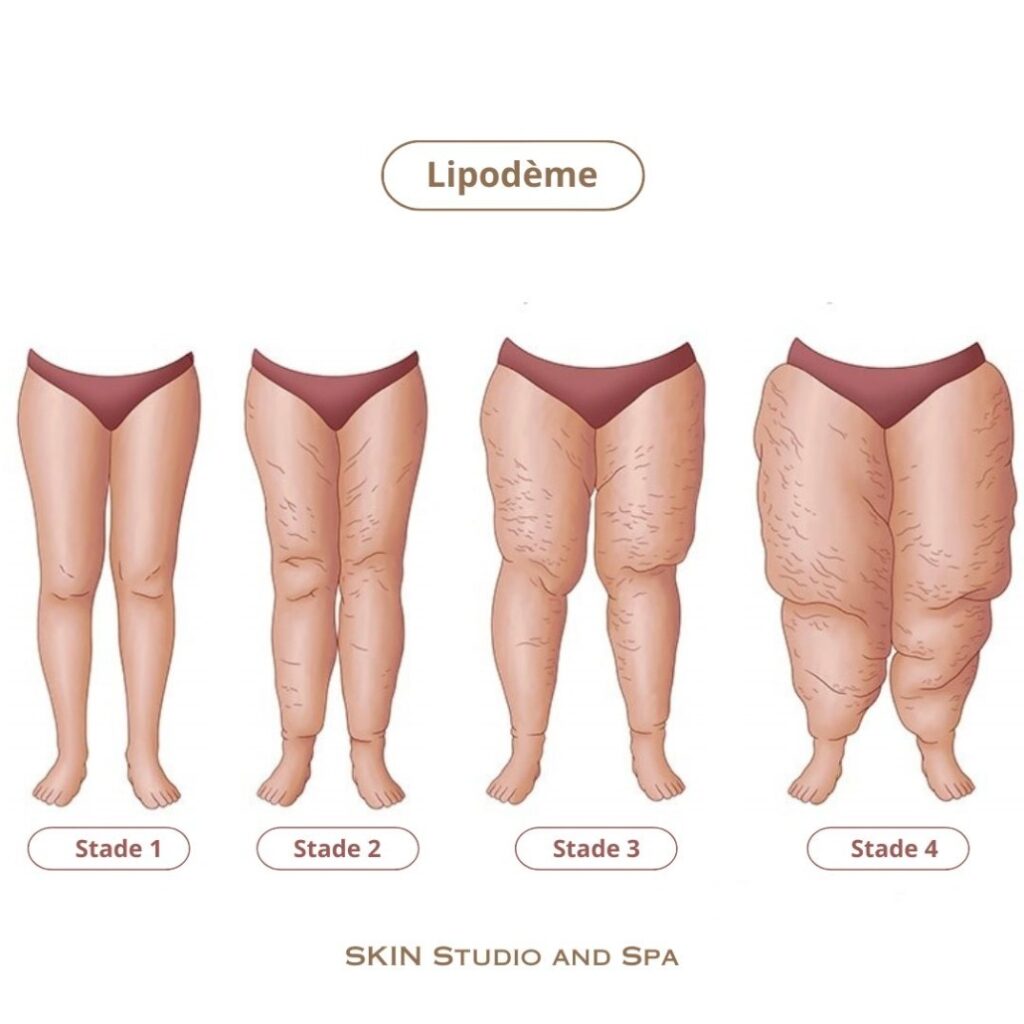
Understanding Lipoedema
Lipoedema is a chronic medical condition characterized by an abnormal accumulation of adipose tissue, typically in the legs, thighs, and arms. Affecting primarily women, this disease causes not only aesthetic concerns but also pain, reduced mobility, and circulatory complications.
While many countries offer certain treatment options, many patients are discovering that turning to Tunisia provides access to comprehensive, affordable, and combinable care for more satisfying results.
Lipoedema Treatment Options in Western Healthcare Systems
Conservative and Non-Invasive Treatment
In most Western countries, initial approaches to lipoedema generally begin with conservative measures. Compression garments, prescribed by physiotherapists or specialist physicians, help reduce swelling and improve lymphatic circulation. These garments must be worn daily to maintain their benefits and are sometimes partially reimbursed depending on the insurance system in place.
Manual lymphatic drainage, performed by certified therapists, is a key component of conservative treatment. Several private clinics offer this therapy, though it is generally not covered by public health systems. Costs can be significant, and multiple sessions are required to observe lasting changes.
Regular exercise, combined with a balanced diet and weight management, remains essential. Specialist physiotherapists guide patients toward appropriate activities that do not compromise lymphatic circulation.
Surgical Options Available
Liposuction, particularly tumescence-assisted liposuction, is available at certain private clinics in Western countries. However, waiting times can be considerable, and costs are substantial, often exceeding 15,000 to 25,000 euros or the equivalent for a complete procedure. Public health systems generally do not cover this procedure unless justified by serious medical complications.
Lymphadenectomy, a procedure involving the removal of abnormal lymph nodes, remains a very limited specialty in most countries. Patients often have to seek out ultra-specialized centers, which are rare and frequently far from home.
Limitations of Conventional Healthcare Systems
While many countries have competent professionals, healthcare systems present several challenges. Waiting times to see a specialist in angiology or vascular surgery can exceed one year. The cost of private procedures remains prohibitive for many, and combining several procedures for an optimal result is not commonly offered or financially accessible.
Tunisia: A Comprehensive and Affordable Alternative
Why Tunisia Has Become an Essential Destination
Tunisia has established itself as a leader in medical tourism, attracting patients from Europe, North America, and beyond. Tunisian clinics combine international medical expertise, cutting-edge technologies, and costs significantly lower than those in Western countries. Tunisian surgeons specializing in lipoedema often hold prestigious training from Europe and North America, are members of international medical associations, and continuously stay up to date with the latest recommended techniques and practices.
Dr. Youssef Gam: A Comprehensive and Personalized Approach to Lipoedema
Among the most recognized Tunisian practitioners in the management of lipoedema, Dr. Youssef Gam stands out for his rigorous and innovative approach. With advanced surgical training and expertise in plastic and reconstructive surgery, he has developed particular mastery of gentle liposuction techniques adapted to lipoedema patients, including Water Assisted Liposuction (WAL) and the tumescent technique, which allow maximum preservation of lymphatic vessels while effectively relieving painful tissues.
Dr. Gam takes a holistic view of each patient: he considers not only the surgical aspects, but also the lymphatic condition, comorbidities, and disease stage. This multidisciplinary approach, combined with rigorous postoperative follow-up including compression therapy and lymphatic physiotherapy, delivers lasting results and a significant improvement in quality of life. His reputation has crossed Tunisia’s borders, attracting patients from Europe and North America seeking serious, accessible care.
Dr. Ramy Ben Salah: Innovation in the Service of Lipoedema
Dr. Ramy Ben Salah has established himself as a reference in surgical treatment of lipoedema in Tunisia through his mastery of innovative technique combinations. Convinced that no single technique is sufficient to address all manifestations of this complex pathology, he has developed personalized protocols that combine several complementary approaches based on each patient’s specific needs.
His approach integrates laser-assisted liposuction (LAL), vibro-liposuction, and superficial liposuction techniques, combined strategically to target both deep fat and the fibrotic tissue characteristic of advanced lipoedema. Dr. Ben Salah also places great importance on preserving the lymphatic system, adapting his surgical techniques to minimize the risk of post-operative lymphatic complications.
Known for his attentiveness and ability to educate, he takes the time to explain to each patient the planned treatment, expected results, and inherent limitations of lipoedema surgery. This transparency, combined with strong clinical outcomes, has earned him a loyal and international patient base.
J-Plasma: A Promising Technology, But Not a Lipoedema Treatment
In the landscape of aesthetic and surgical technologies, J-Plasma — also known as Renuvion — is attracting growing interest. This device combines helium and radiofrequency energy to generate a cold plasma capable of contracting and tightening skin tissue with great precision. It is primarily used as a complement to conventional liposuction to improve skin retraction, particularly in areas such as the abdomen, arms, or thighs.
However, it is essential to state clearly that J-Plasma is in no way a treatment for lipoedema. This distinction is important, as confusion between skin tightening and treatment of a lympho-adipose pathology like lipoedema can lead patients to have unrealistic expectations or delay appropriate care.
Lipoedema is a chronic disease characterized by pathological accumulation of adipose tissue, often painful and resistant to dieting and physical exercise. Its treatment relies on specific approaches — lymphatic-sparing gentle liposuction, manual lymphatic drainage, therapeutic compression — which have nothing to do with the superficial skin tightening targeted by J-Plasma. Using this technology in hopes of treating lipoedema would not only be ineffective, but potentially contraindicated depending on the stage and patient profile.
J-Plasma can be a useful complement in certain post-surgical aesthetic contexts, but only after rigorous evaluation by a specialist surgeon, and never as a substitute for appropriate medical or surgical treatment of lipoedema.
Combining Multiple Procedures: The Tunisian Holistic Approach
Benefits of Combining Procedures
One of the greatest advantages of traveling to Tunisia for lipoedema treatment lies in the ability to combine multiple procedures in a single trip. Unlike the gradual approach often adopted elsewhere, Tunisian surgeons offer a complete and coherent treatment plan.
Frequently Combined Procedures
Liposuction and Lymphadenectomy
Removing abnormal adipose tissue combined with extracting hypertrophied lymph nodes produces results far superior to liposuction alone. This combination addresses the underlying pathology of lipoedema more completely.
Liposuction and Skin Surgery
For patients with significant skin laxity following fat removal, an abdominoplasty, thighplasty, or arm lift can be performed. This combined approach creates more harmonious and aesthetically satisfying contours.
Associated Vascular Treatment
Some patients simultaneously suffer from varicosities or venous problems. Tunisian clinics offer treatment of these conditions at the same time, optimizing circulation and overall results.
Post-Surgical Lymphatic Drainage
Before departure, several intensive lymphatic drainage sessions are undertaken to prepare and accelerate recovery. These sessions, integrated into the care package, reduce post-operative edema and facilitate better healing.
Planning and Recovery
Tunisian clinics methodically plan the timing of each procedure to minimize overall trauma and complications. A patient may have liposuction on day one, then a secondary procedure 5 to 10 days later, allowing for parallel rather than successive recovery.
The total length of stay generally ranges from 10 to 21 days, depending on the scope of procedures. This timeframe allows patients to benefit from post-operative follow-up directly on-site before returning home with clear recommendations for convalescence.
Important Considerations and Safety
Verifying Accreditations
Before choosing a Tunisian clinic, it is crucial to verify international accreditations, particularly ISO 9001, as well as adherence to globally recognized safety standards. Reputable clinics offer explicit guarantees and coverage for potential complications.
Medical Communication
Choosing a clinic with a French- or English-speaking staff is essential. Clear communication before, during, and after the procedure is paramount for patient safety and satisfaction.
Post-Operative Follow-Up
The best Tunisian clinics offer virtual follow-up consultations several weeks after the patient returns home. This continuity of care ensures optimal recovery and allows any concerns to be addressed promptly.
Testimonials and Results
Many international patients report remarkable satisfaction following combined treatment in Tunisia. Not only are the physical results significant, but the ability to walk, move, and participate in daily activities improves dramatically. The chronic pain associated with lipoedema decreases significantly and, for many, disappears entirely.
Conclusion
While many countries offer certain treatment options for lipoedema, high costs, long waiting times, and the absence of combined approaches represent substantial obstacles for many patients. Tunisia is emerging as a transformative alternative, offering highly skilled surgeons, significantly reduced costs, and the possibility of combining multiple procedures for optimal results.
For those suffering from lipoedema, a therapeutic journey to Tunisia represents not simply a financial saving, but an investment in a better quality of life, increased mobility, and restored self-confidence. With careful planning and the choice of a reputable clinic, this approach offers a viable and effective path toward lasting improvement.
FAQ: Lipoedema
What exactly is lipoedema?
Lipoedema is a chronic disease characterized by an abnormal and disproportionate accumulation of adipose tissue, generally in the legs and arms. Unlike simple obesity, lipoedema is a distinct condition, often hereditary, that causes pain, swelling, and mobility difficulties. It primarily affects women and cannot be effectively treated through diet or exercise alone.
Why does lipoedema not respond to conventional dieting?
Lipoedema involves an accumulation of abnormal fat cells that behave differently from ordinary adipose cells. These cells do not respond to the metabolic changes caused by diet and exercise, which explains why patients lose weight in other areas of the body but not in the areas affected by lipoedema.
How much does lipoedema treatment cost in Tunisia?
Liposuction for lipoedema costs between 5,000 and 10,000 euros in Tunisia, compared to 15,000 to 25,000 euros or more in most Western countries. Combined procedures increase the cost proportionally, but remain significantly less expensive. All-inclusive packages generally cover consultations, procedures, accommodation, and local transportation.
How long does it take to see results?
Initial results are visible after 4 to 6 weeks, but final results generally take 3 to 6 months. Significant improvement in mobility and pain is often reported within the first few weeks.
What are the possible risks and complications?
Like any surgery, there are risks, including infection, hematoma, temporary numbness, and scarring. However, serious complications are rare in accredited Tunisian clinics. Choosing an experienced surgeon considerably minimizes these risks.
How long does recovery take?
Most patients return to light activities after 2 to 3 weeks. A full return to demanding activities takes 6 to 8 weeks. Wearing a compression garment for 4 to 6 weeks post-operatively is recommended.
Are the results permanent?
Yes, liposuction for lipoedema offers permanent results. However, ongoing weight management, compression garment wear, and lymphatic drainage are important to maintain results and prevent partial recurrence.
How do I choose a good clinic in Tunisia?
Look for ISO-accredited clinics with surgeons holding international certifications and specific experience in lipoedema. Check reviews from international patients, request before-and-after photos, and ensure that communication in French or English is fluent.
Can I combine multiple procedures in a single trip?
Absolutely. This is one of Tunisia’s main advantages. Many patients combine liposuction, lymphadenectomy, skin surgery, and intensive lymphatic drainage during a single stay.
What insurance coverage is available for treatment in Tunisia?
Most private insurance policies do not cover treatment abroad. However, the reduced cost in Tunisia often makes direct payment more affordable than local options. Check with your insurer before departing.
Do I need to wear compression garments after surgery?
Yes, wearing compression garments for 4 to 6 weeks is essential to reduce edema and promote proper healing. Some clinics provide initial compression garments, while others recommend an additional purchase.
Is there a guarantee if something goes wrong after I return home?
The best Tunisian clinics offer a guarantee and coverage for complications arising within the first few weeks after surgery. Confirm these details during the preliminary consultation.